sana › Fruits & Vegetables › Prunes
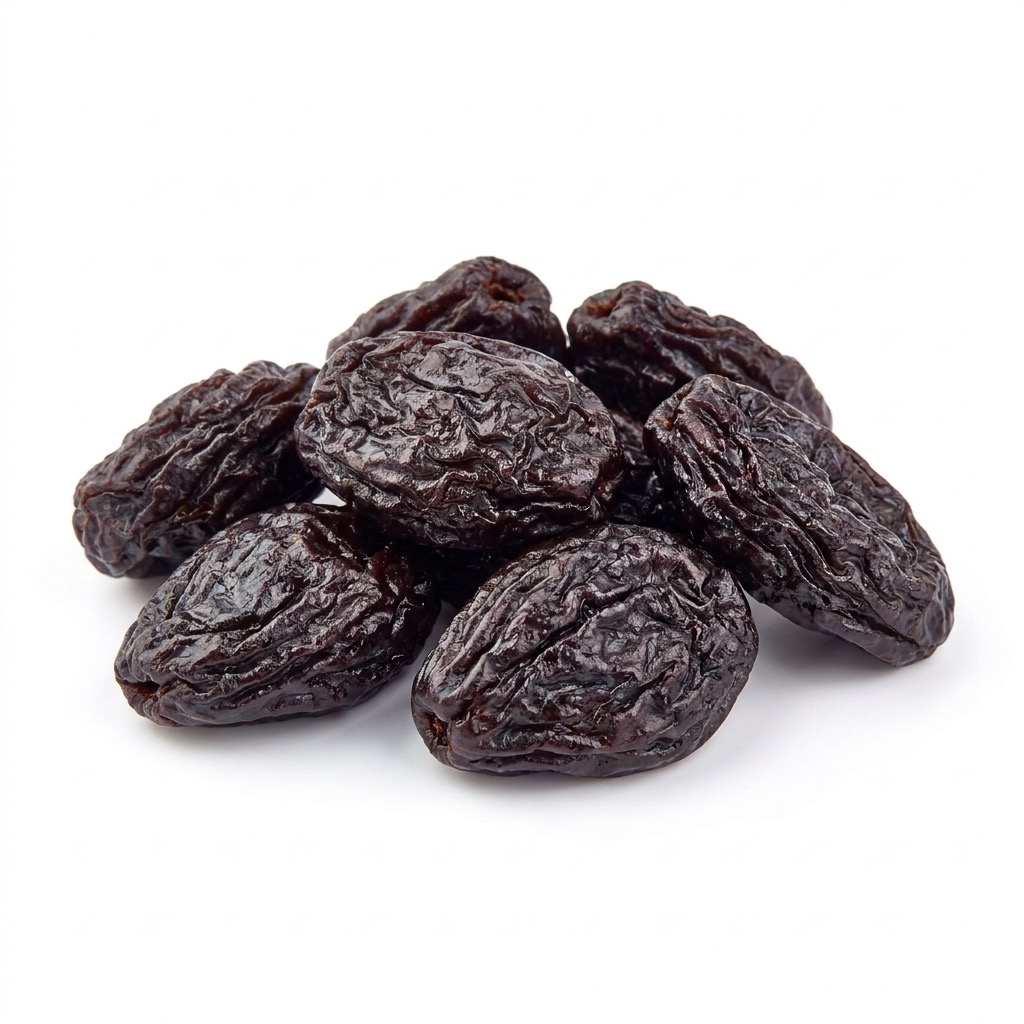
Prunes · Prunus domestica
Photo: (c) Nathan Odgers, some rights reserved (CC BY) · CC BY · via iNaturalist
Fruits & Vegetables
Prunes
Prunus domestica
A prune is a plum dried whole, and only a few varieties will do it — most plums ferment around the stone before they finish drying.
Benefits
Prunes get a stuck gut going again, with more complete movements in a week and softer stools.
What It Is Known For
It is fiber and a sugar alcohol doing ordinary work, not a purge, and treating it as one is how people end up uncomfortable.
The fiber sits in the skin and the flesh, and juice carries neither.
The trial that showed it worked had an average age of thirty-eight.
Key Active Compounds
The sugar alcohol the fruit carries.
The parts that carry the fiber.
How to Take It / Use It
Eat about five or six prunes twice a day, with water. Give it three weeks.
Cautions
Sorbitol draws water into the gut, so a large handful in one go brings wind and loose stools.
Dried fruit is concentrated sugar, so count it if you are counting.
Where It Comes From
Prunus domestica came from the country between the Caspian and the Black Sea and spread west with cultivation. The drying varieties are a small part of the plums grown.
How We Choose It
We check every product so you don't have to. A prunes only makes our list if:
- Whole prunes, one ingredient. Nothing sweetened, glazed or preserved beyond the drying.
- Not juice. The fiber is in the skin and the flesh, and juice leaves both behind.
- Unpitted or pitted both fine. The stone changes nothing except how fast you eat them.
If no product meets these standards, we don't list one. No exceptions for affiliates.
See our picks
Sources1
- Attaluri A, et al. Randomised clinical trial: dried plums (prunes) vs. psyllium for constipation. Alimentary Pharmacology & Therapeutics, 2011;33:822-28. Randomized trial