sana › Herbs & Plants › Aloe Vera
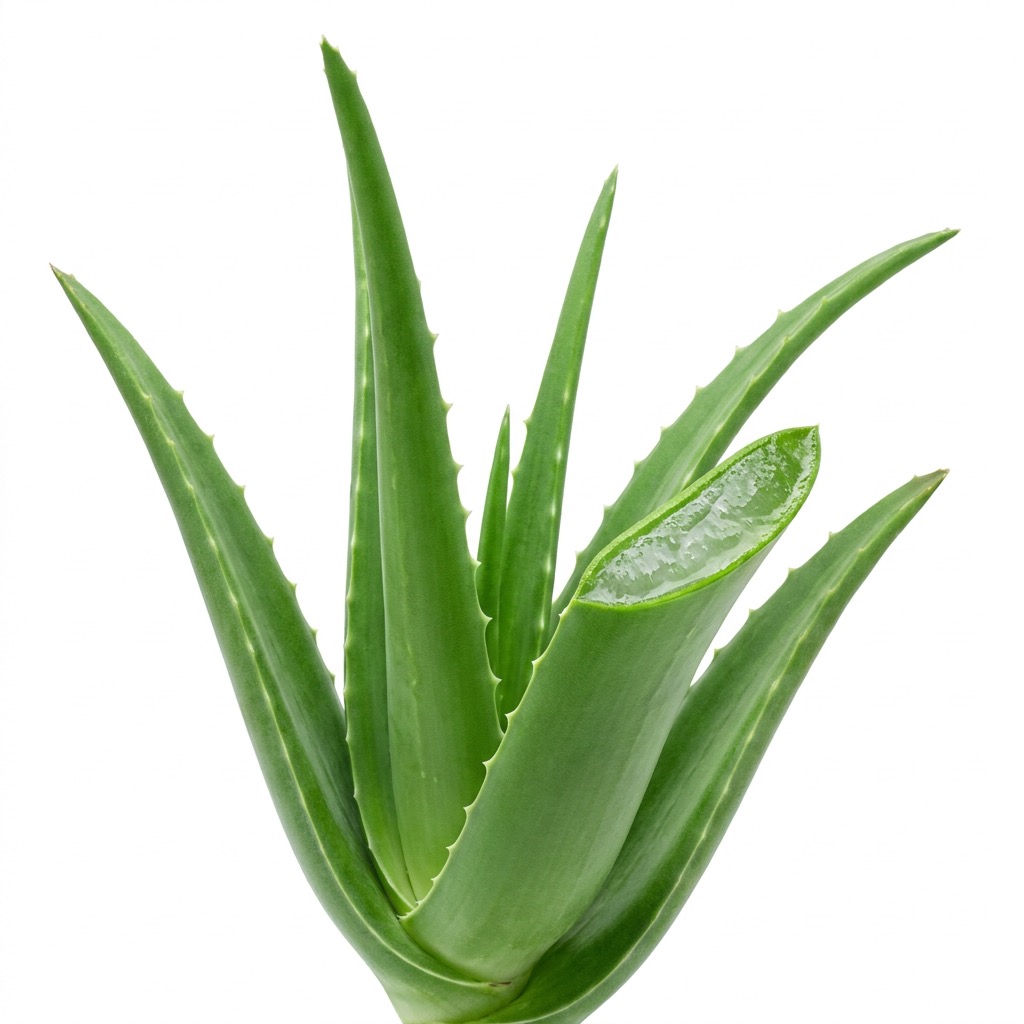
Aloe Vera · Aloe vera
Photo: (c) Carlos Domínguez-Rodríguez, some rights reserved (CC BY) · CC BY · via iNaturalist
Herbs & Plants
Aloe Vera
Aloe vera
Aloe is not a cactus. It is a succulent, and its closest relatives are lilies. It has been called the plant of immortality for centuries, and it is one of the oldest remedies still in everyday use.
Benefits
Aloe gel soothes burns and cools sunburn. It dries into a thin film that holds water against the skin, and a burn heals faster and hurts less while the skin stays moist.
Aloe gel heals mouth ulcers and eases sore gums. It lays a film over the raw patch that stays put while you eat and talk, so the burning drops and the ulcer closes sooner.
Aloe juice lowers a high blood sugar level and helps hold it steady.
What It Is Known For
The unfiltered whole-leaf kind caused gut cancer in animals, and there is no reason to drink any of it every day.
The part that does it came off the shelf in 2002 for want of safety data, and it is the same bitter sap this page tells you to avoid.
Nothing has ever tested it, and the idea has no measurable meaning.
There is not enough reliable information to say either way, which is not the same as it working.
Key Active Compounds
The long-chain sugar aloe gel is usually measured by.
Long-chain sugars that hold water.
The woody fiber in the leaf.
One of the pale compounds in the gel.
In the bitter yellow sap; a strong natural laxative.
How to Take It / Use It
Cut a thick outer leaf near the base and stand it cut end down in a cup for ten minutes so the yellow sap runs out. Slice the skin off one side and rub the clear pulp on, two or three times a day. Peeled pieces keep in the freezer, and a frozen one is better on sunburn.
Swish a teaspoon of the clear pulp around the mouth for a minute and spit it out, two or three times a day.
Drink bottled juice rather than making it, and follow the amount on the bottle. Brands differ in strength by more than tenfold, so start at the low end.
Why It Works
Biological mechanisms
Glucomannan and gibberellin tell fibroblast cells to multiply and make more collagen, which speeds up wound and burn healing.
It blocks the pathways that cause swelling, redness and pain.
Natural antiseptics, including phenols and sulfur, stop harmful bacteria and fungi growing on the skin.
The gel is 96% water with complex sugars that lock moisture into the skin without feeling greasy.
Everyday effects
The high water content and anti-inflammatory action cool and repair damaged skin.
Its antibacterial action lowers breakout-causing bacteria and reduces red, angry blemishes.
Properly purified and taken in small amounts, it calms an upset stomach.
Cautions
The yellow sap just under the leaf skin is a harsh laxative, so buy juice labeled decolorized, which means the sap has been filtered out.
It was taken off the shelf as a laxative for want of safety data, so buy juice labeled decolorized — that means the sap has been filtered out.
Where It Comes From
Aloe vera is native to the southeastern Arabian Peninsula, specifically the Hajar Mountains in Oman and the United Arab Emirates. Over thousands of years, trade and cultivation spread the resilient succulent across North Africa, the Mediterranean, and eventually worldwide.
How We Choose It
We check every product so you don't have to. A aloe vera only makes our list if:
- The juice says decolorized, purified, or carbon filtered. That means the bitter yellow sap has been filtered out.
- Gel must list aloe first or second, with denatured alcohol nowhere near the top. Alcohol-heavy gel dries the burn it was bought to soothe.
If no product meets these standards, we don't list one. No exceptions for affiliates.
See our picks
Sources16
- Plants of the World Online, Royal Botanic Gardens Kew. Aloe vera (L.) Burm.f. Accepted name, native to northern Oman, and the synonym Aloe barbadensis. Kew
- Grace OM, Buerki S, Symonds MRE, et al. Evolutionary history and leaf succulence as explanations for medicinal use in aloes and the global popularity of Aloe vera. BMC Evolutionary Biology 15:29, 2015. The Arabian origin, and the trade-route explanation. Full text
- Hamman JH. Composition and applications of Aloe vera leaf gel. Molecules 13(8):1599, 2008. Gel is 98.5 percent water; acemannan structure; the latex chemistry. Full text
- Huang Y-N, et al. Effects of Aloe vera on burn injuries. Journal of Burn Care and Research 45(6):1536, 2024. Abstract
- Dat AD, Poon F, Pham KBT, Doust J. Aloe vera for treating acute and chronic wounds. Cochrane Database of Systematic Reviews CD008762. The honest assessment of how thin the wound evidence is. Cochrane
- Choonhakarn C, et al. The efficacy of aloe vera gel in the treatment of oral lichen planus. British Journal of Dermatology 158(3):573, 2008. Abstract
- Paulsen E, Korsholm L, Brandrup F. A double-blind, placebo-controlled study of a commercial Aloe vera gel in psoriasis vulgaris. JEADV 19(3):326, 2005. The one where the plain cream did better than the aloe. Record
- Zhang Y, et al. Efficacy of Aloe vera supplementation on prediabetes and early non-treated diabetic patients. Nutrients 8(7):388, 2016. Full text
- Hong SW, et al. Aloe vera is effective and safe in short-term treatment of irritable bowel syndrome. Journal of Neurogastroenterology and Motility 24(4):528, 2018. Full text
- National Toxicology Program. Technical Report 577, on a non-decolorized whole leaf extract of aloe. The drinking-water study in rats and mice. Report
- International Agency for Research on Cancer, Monographs Volume 108. The aloe chapter and the group 2B classification of whole leaf extract. Monograph
- California OEHHA. Proposition 65 listing of aloe vera, non-decolorized whole leaf extract, effective 4 December 2015. Listing
- LiverTox. Aloe vera. National Institute of Diabetes and Digestive and Kidney Diseases. Oral products only; topical aloe is not implicated. Entry
- Touwaide A, Appetiti E. Herbs in History: Aloe. American Herbal Products Association, 2022. Why the biblical aloes is agarwood, and why the Egyptian story does not stand. Article
- Pliny the Elder, Natural History, Book 27. The classical drug was dried sap, imported from India, used chiefly as a purgative. Text
- Mandeville FB. Aloe vera in the treatment of radiation ulcers of mucous membranes. Radiology 32(5):598, 1939. The American X-ray burn work. Paper