sana › Seeds & Nuts › Walnuts
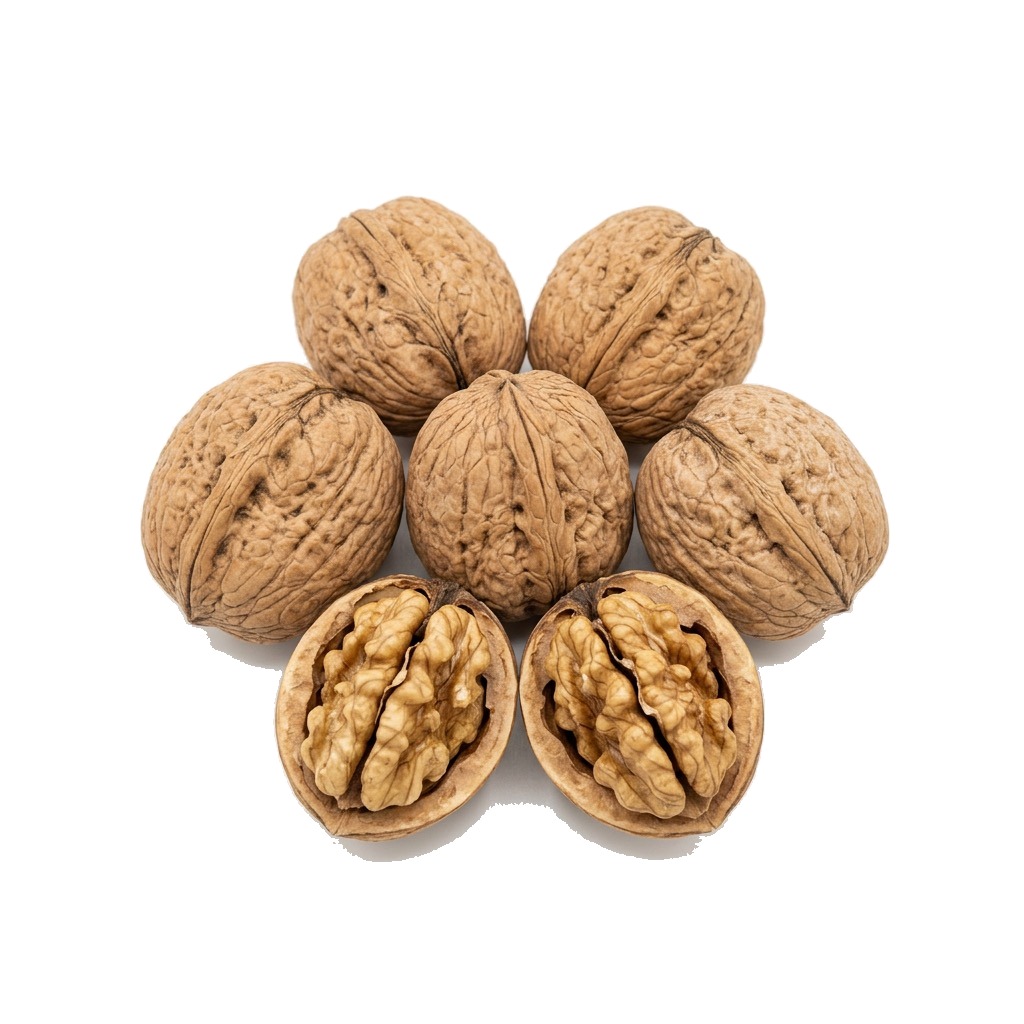
Walnuts · Juglans regia
Photo: (c) Gianni Del Bufalo bygdb, some rights reserved (CC BY) · CC BY · via iNaturalist
Seeds & Nuts
Walnuts
Juglans regia
A walnut tree poisons the ground beneath it. The roots release a compound that stops most other plants growing within reach, which is why little grows under an old one.
Benefits
A handful a day brings total cholesterol, the harmful kind and blood fats down. The good kind stays where it is.
What It Is Known For
That is the oldest kind of reasoning in herbalism and there is nothing behind it.
The trials that improved cholesterol did it while people ate them, and weight was not what moved.
The oil leaves the fiber and the skin behind, and the nut is what was tested.
Key Active Compounds
The plant omega-3 the nut carries.
The papery brown layer, and the bitter part.
How to Take It / Use It
Eat a handful a day, about 30 g, in place of something else rather than on top of it.
Cautions
Tree nut allergy is common and can be severe.
A handful is a substantial amount of food, so it works best replacing something rather than adding to it.
Where It Comes From
Juglans regia came from the mountains of central Asia and travelled west along the trade roads. California now grows most of the world's crop.
How We Choose It
We check every product so you don't have to. A walnuts only makes our list if:
- In the shell, or in a sealed pack. The oils turn rancid in open air, and rancid walnut is unmistakable.
- Nothing added. Not roasted in oil, not salted, not candied.
- Not walnut oil. The oil leaves the fiber and the skin behind.
- Kept cold once open. The fridge or the freezer, not the cupboard.
If no product meets these standards, we don't list one. No exceptions for affiliates.
See our picks
Sources1
- The effect of walnut intake on lipids: a systematic review and meta-analysis of randomized controlled trials. Nutrients, 2022. Meta-analysis