sana › Bee Products › Manuka Honey
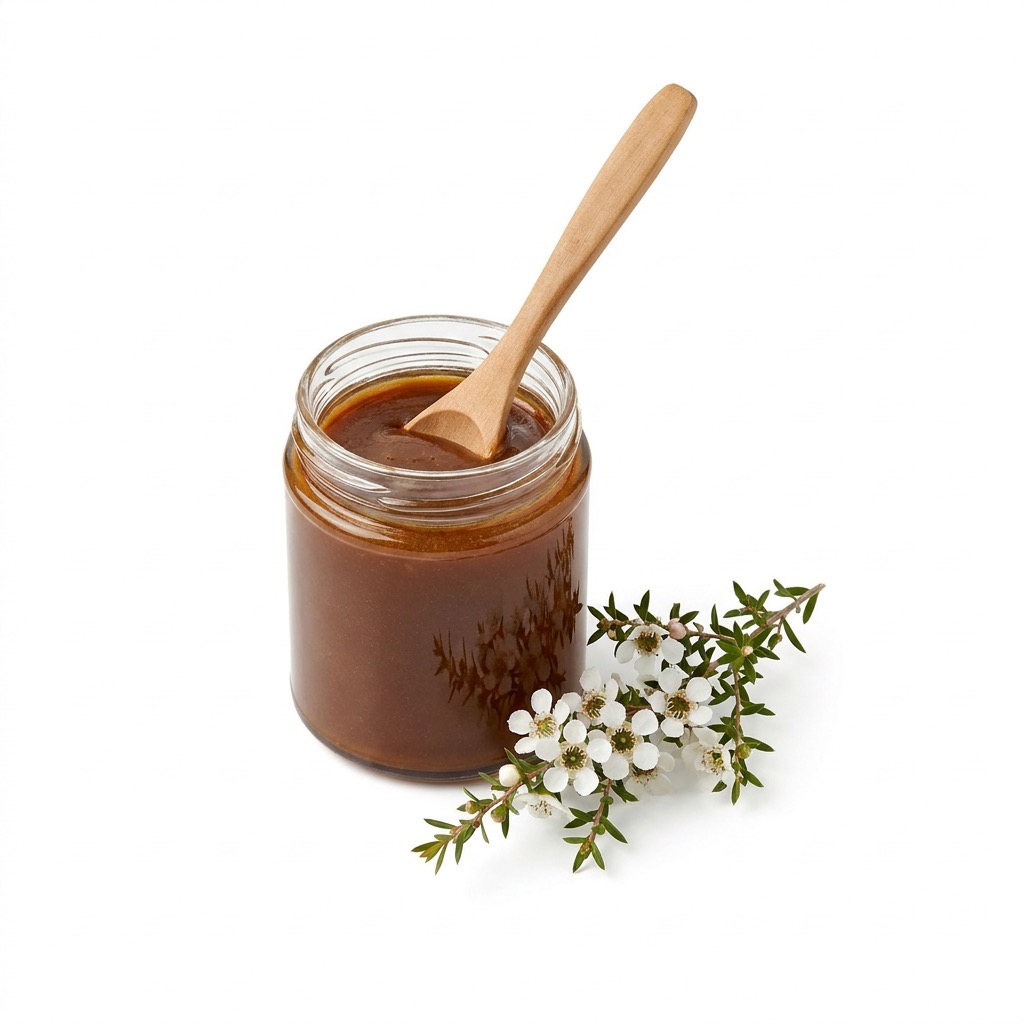
Manuka Honey · Leptospermum scoparium
Bee Products
Manuka Honey
Leptospermum scoparium
The manuka tree flowers for about eight weeks a year, in one country, and that is the entire supply. Beekeepers truck hives into the hills for those weeks and take them out again. Far more manuka honey is sold around the world each year than New Zealand can possibly make.
Benefits
A medical-grade manuka dressing closes a long-standing foot ulcer faster.
Chewing a manuka honey product brings down plaque and bleeding.
What It Is Known For
The number on the jar measures one compound, and what it buys you is a dressing for a stubborn ulcer and something to chew for your gums — more manuka is sold each year than New Zealand can make.
Manuka kills those bacteria in a dish, and a dish is the real setting only on skin or in the mouth — nothing shows it reaching an infection inside you.
That is what honey does, and honey of any kind did it in the trials, so a spoonful of ordinary honey is the same thing at a fraction of the price.
The one trial behind this used kanuka, a different honey, and it did not work.
Key Active Compounds
The compound behind manuka's antibacterial strength.
Comes from the flower and turns into methylglyoxal as honey matures.
The bee enzyme that makes hydrogen peroxide.
Traditionally Used
Manuka leaves were steeped in a calabash of water with hot stones and the liquid drunk for a fever, and the bark was boiled in water and drunk for an upset gut. Those are uses of the tree; Maori medicine does not record the honey.
How to Take It / Use It
Cover the cleaned ulcer with a medical-grade manuka dressing rather than honey from a jar, and change it daily.
Chew a manuka honey product for ten minutes after a meal, three times a day.
Why It Works
Manuka holds far more methylglyoxal than any other honey, and that compound kills bacteria on contact.
The peroxide in ordinary honey is broken down by an enzyme in body fluid. Methylglyoxal is not, so manuka keeps working inside a wet wound.
Like any honey it is concentrated enough to pull water straight out of bacteria.
The same pull lifts away dead material and lets new skin move in.
Cautions
Manuka is still honey and mostly sugar, so anyone managing blood sugar should count it.
Never give honey of any kind to a baby under one year old, because it can cause infant botulism.
Jar honey is not sterile and should not go on an open wound.
Where It Comes From
Manuka honey comes only from New Zealand, where bees work the manuka tree during its short summer flowering. The same plant grows in parts of Australia, and honey from it is sold under other names.
How We Choose It
We check every product so you don't have to. A manuka honey only makes our list if:
- Made in New Zealand. Manuka from anywhere else is not manuka.
- A UMF (Unique Manuka Factor) or MGO (methylglyoxal) number on the jar. UMF measures four markers and is the stricter of the two.
- Independent lab testing named on the jar or website. No lab named means no way to verify it was tested.
- Priced like manuka. A jar at supermarket honey prices is not manuka — far more is sold each year than New Zealand produces.
- No unexplained in-house grading system. If the scale is the brand's own and unpublished, the number means nothing.
If no product meets these standards, we don't list one. No exceptions for affiliates.
See our picks
Sources3
- Cleveland Clinic. Benefits of manuka honey. Health essentials
- Science Learning Hub, New Zealand. Honeybees and manuka trees. Explainer
- New Zealand Honey Co. How to avoid buying fake manuka honey. Buyer's guide